DAG®
DAG has spent more than three decades shaping the canon of modern Indian art through scholarship, archives, and exhibitions that earned deep trust within collector and academic circles. By 2019, the opportunity was not reinvention, but elevation. To position DAG as a global art institution able to speak confidently to international audiences while retaining the authority and depth of its history.
The mandate was to move from a gallery identity to an institutional presence. DAG needed to feel contemporary without erasing lineage, and global without flattening cultural specificity. Operating across exhibitions, catalogues, archives, and public programming, the system had to unify physical spaces, print, digital platforms, and communication surfaces without becoming decorative or trend driven.
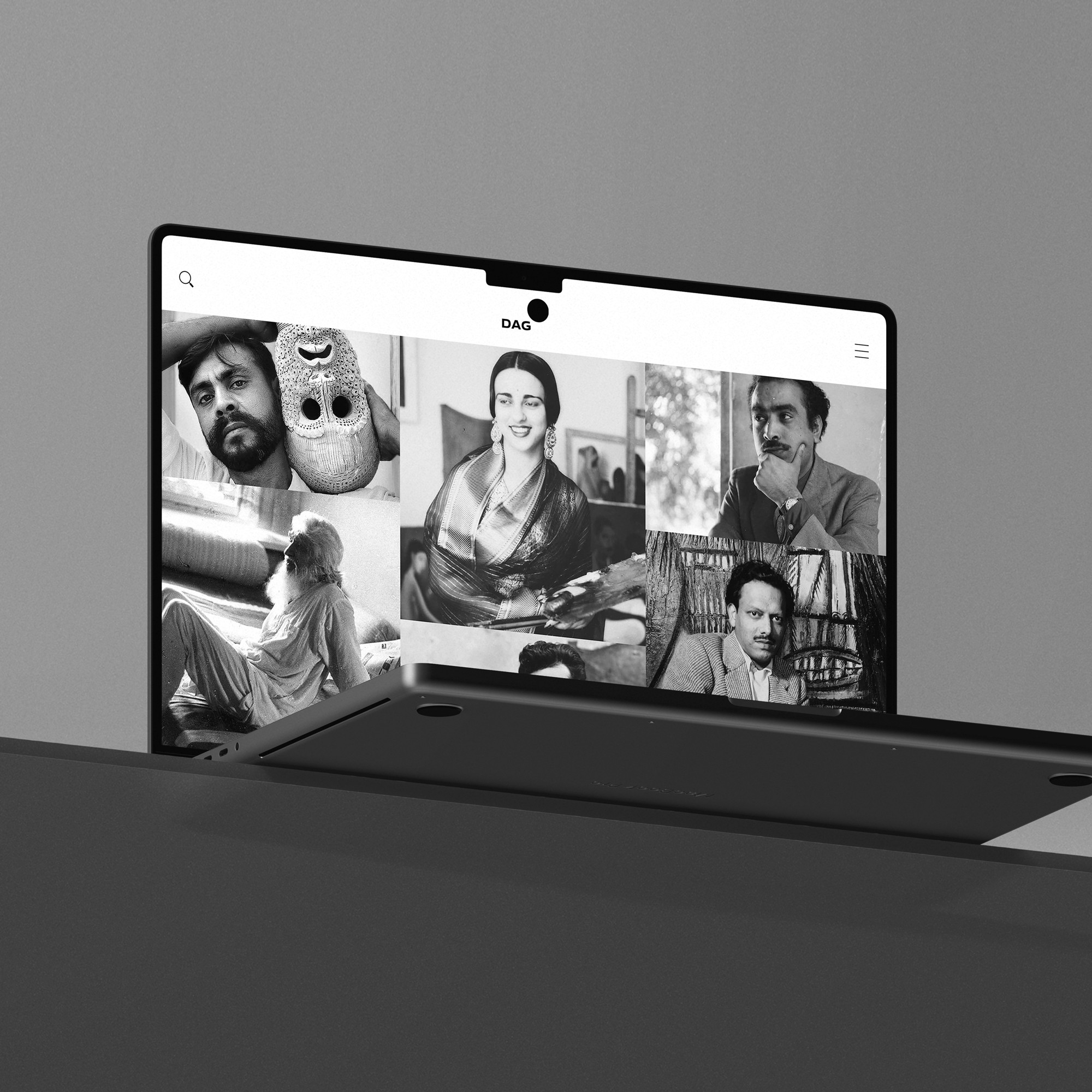
Our work focused on a ground up evolution anchored in restraint and clarity. Visual language was refined through disciplined typography, modular grids, and a palette rooted in Indian pigment traditions, allowing the art to lead at every touchpoint. A new monogram, motion principles, and a rebuilt digital experience were designed to reward slow looking and serious engagement, supporting editorial depth, archival access, and gallery paced interaction.
The result repositioned DAG as a global art institution grounded in scholarship and scale, capable of carrying its legacy forward without dilution. For Lazy Eight, the engagement reinforced a belief that holds across cultural institutions: when design respects history and creates space for meaning, legacy does not need protection. It moves forward on its own terms.
DAG has spent more than three decades shaping the canon of modern Indian art through scholarship, archives, and exhibitions that earned deep trust within collector and academic circles. By 2019, the opportunity was not reinvention, but elevation. To position DAG as a global art institution able to speak confidently to international audiences while retaining the authority and depth of its history.
The mandate was to move from a gallery identity to an institutional presence. DAG needed to feel contemporary without erasing lineage, and global without flattening cultural specificity. Operating across exhibitions, catalogues, archives, and public programming, the system had to unify physical spaces, print, digital platforms, and communication surfaces without becoming decorative or trend driven.
Our work focused on a ground up evolution anchored in restraint and clarity. Visual language was refined through disciplined typography, modular grids, and a palette rooted in Indian pigment traditions, allowing the art to lead at every touchpoint. A new monogram, motion principles, and a rebuilt digital experience were designed to reward slow looking and serious engagement, supporting editorial depth, archival access, and gallery paced interaction.
The result repositioned DAG as a global art institution grounded in scholarship and scale, capable of carrying its legacy forward without dilution. For Lazy Eight, the engagement reinforced a belief that holds across cultural institutions: when design respects history and creates space for meaning, legacy does not need protection. It moves forward on its own terms.




























DEL · DXB · NYC