Indian Brand Directory®
The Brief
India is entering its Cambrian moment for brands.
McKinsey's research points to three structural shifts converging at once: a Direct-to-Consumer boom where over half of Indian MSMEs now favour D2C routes, a wave of hyper-local brands emerging from Tier 2 and Tier 3 cities, and a consumption economy projected to generate $2 trillion in new revenue by 2030, driven largely by homegrown brands. The barriers that throttled brand creation in the West for fifty years, physical shelf space, mass-media budgets, nationwide distribution, have collapsed. What replaces them is speed, social commerce, and an infinite digital shelf.
The output is a volume of new brands no existing discovery platform is equipped to catalogue.
The client came to us with two asks. First, build the Product Hunt of Indian brands: aesthetic, future-forward, effortless to browse, and designed for the way attention actually works now. Second, build the brand and the infrastructure so it can fork cleanly into new geographies as the model proves out.
The constraint: a small team.
The ambition: a category-defining platform, architected to scale internationally from day one.
The Positioning
Most directories are utilitarian. Search bars, filters, grids. We rejected that entirely.
Indian Brand Directory was positioned as a sensory experience first, a database second. The logic was that in a market flooded with brands, the discovery layer itself has to feel like a brand. If the container is generic, the contents disappear. If the container is confident, the contents feel curated.
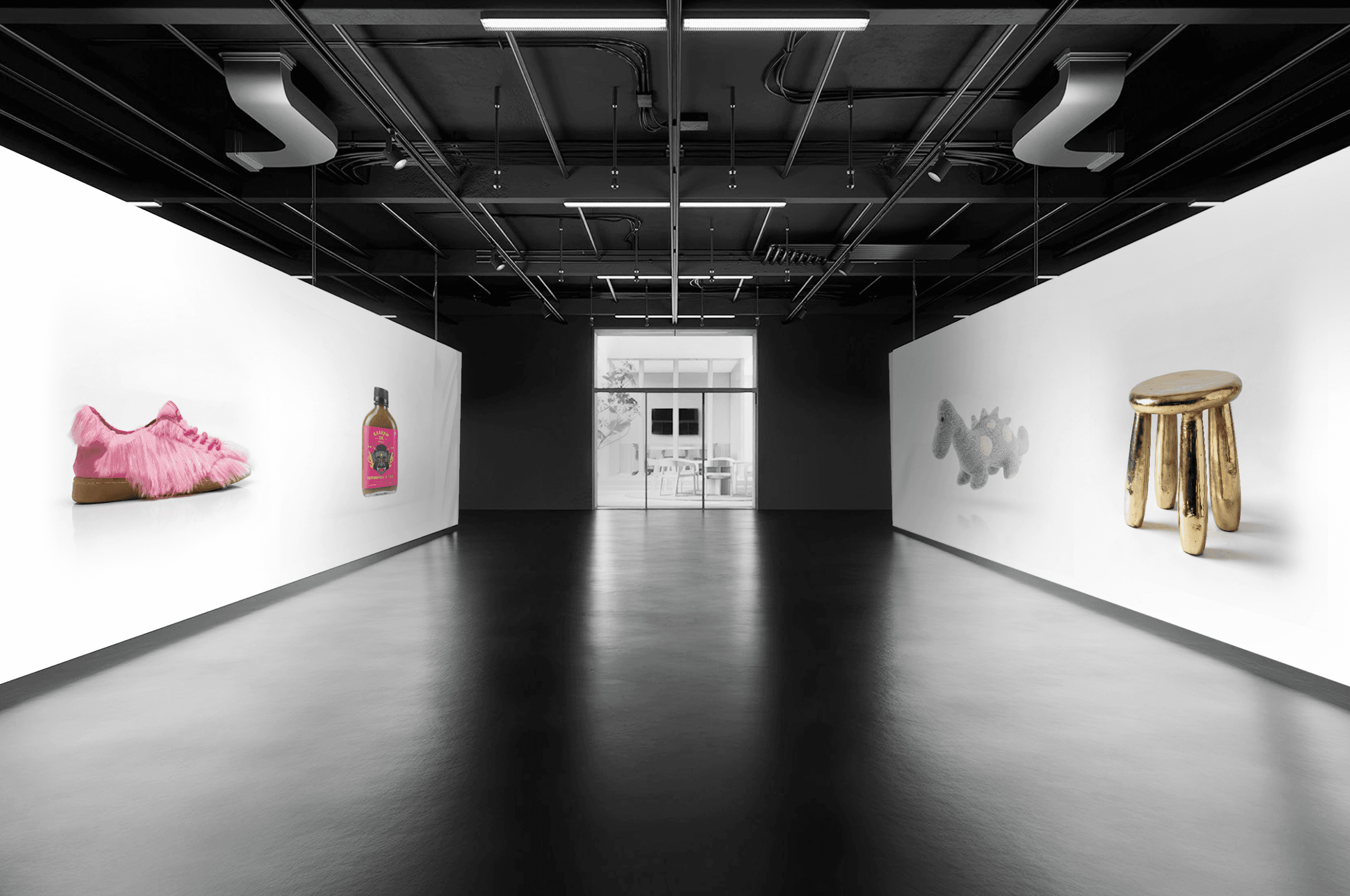
We pushed the aesthetic toward something closer to a museum than a marketplace. Quiet. Minimal. Product-first. A visual language designed to let every submitted brand breathe.

The Mark
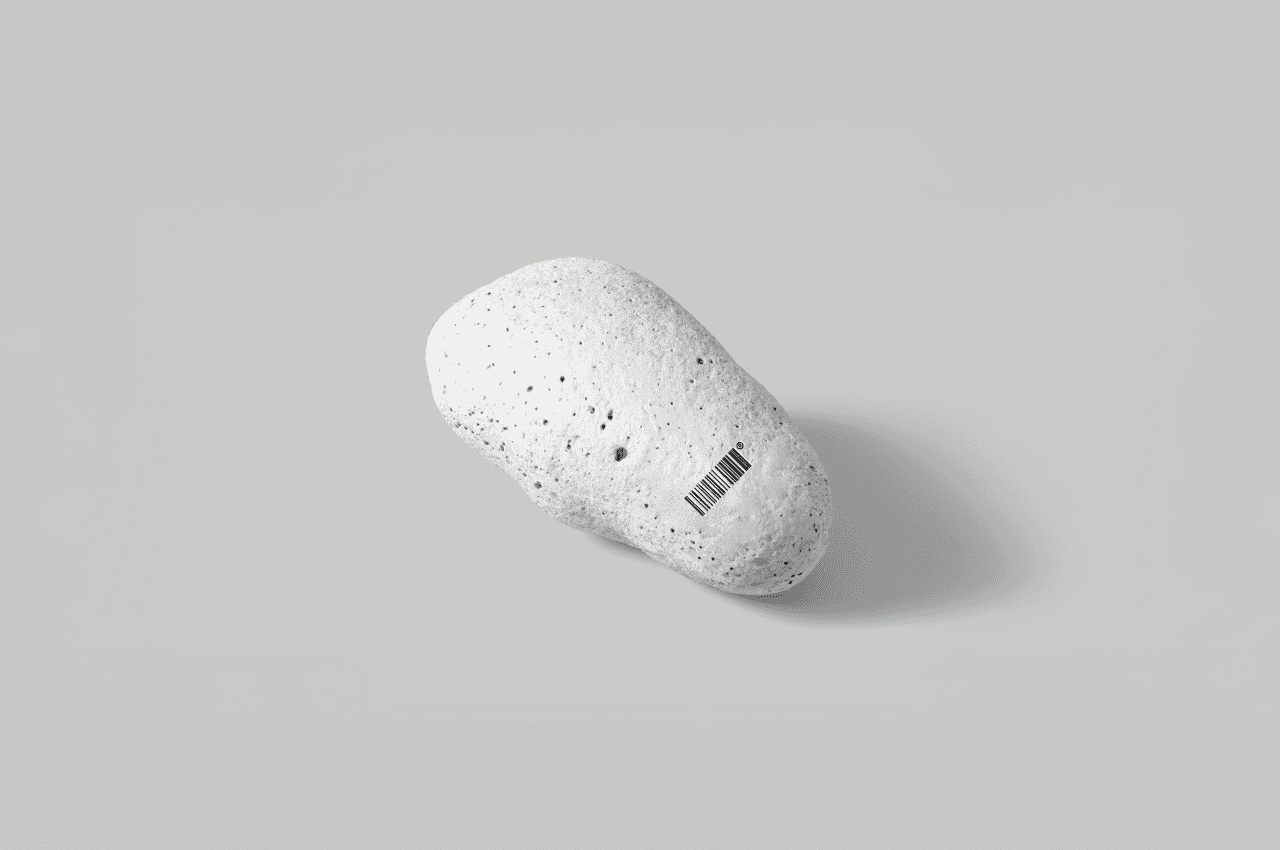
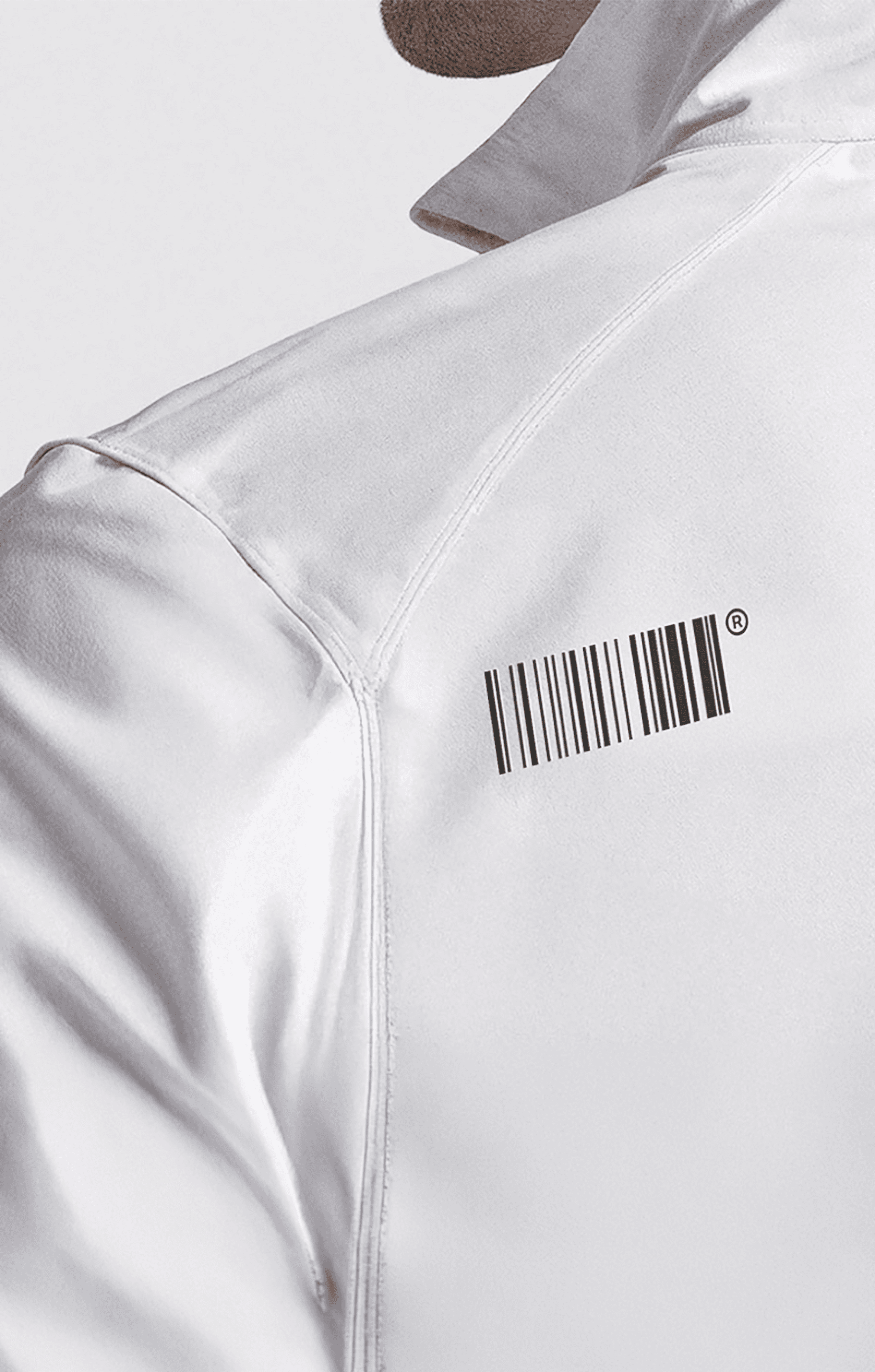
The logo unit is a barcode. The letters I, B, and D rendered as vertical lines.
The thinking: a barcode is the atomic unit of a brand. The thing scanned at the point of transaction. The line where an object becomes a product and a product becomes a purchase. By making the mark itself a barcode, IBD signals what it is without explaining it.
The mark scales. It works at icon size on an Instagram grid. It works at billboard size on a merchandise application. It works on a ceramic pod on a grey background, which became one of our earliest brand images and a thesis statement in itself: even a rock can become a brand.
Crucially, the barcode system is geographically forkable by design. The three bars encode IBD for Indian Brand Directory. Swap the letters and the same system accommodates any new market the platform expands into. The identity scales without the identity changing.
The System
IBD is not just a website. It is a pipeline.
We built a discovery system powered by a set of AI agents that scan the internet for new Indian product launches across categories. The agents ingest product information, identify quality and relevance, and flag candidates for inclusion.
Selected products then move through an automated visual pipeline. AI strips each product image to a neutral background, re-composes it within the IBD visual language, and converts it into a subtle motion asset designed to hold attention in a scrolling feed. The output is consistent regardless of the source image quality or brand polish.
The result is a catalogue that looks curated even when it is automated. The machine does the volume. The aesthetic does the curation.
The Product
The site has three views.
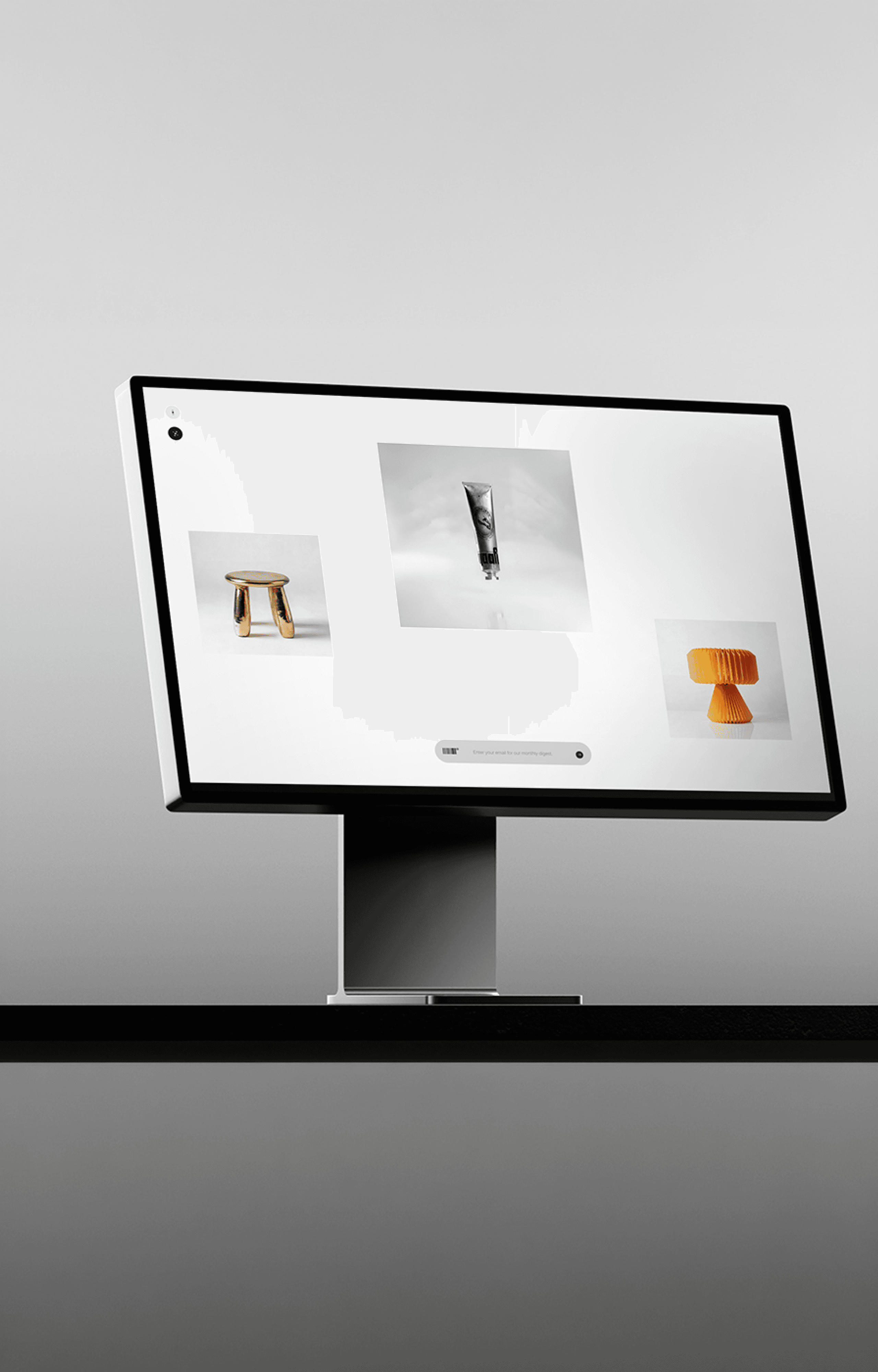
The first is an infinite plane. Users move in any direction and products surface in real time. No filters, no search, no visible taxonomy. Each product links out with a tracked UTM parameter so the directory can measure click-through and begin to understand taste signals.
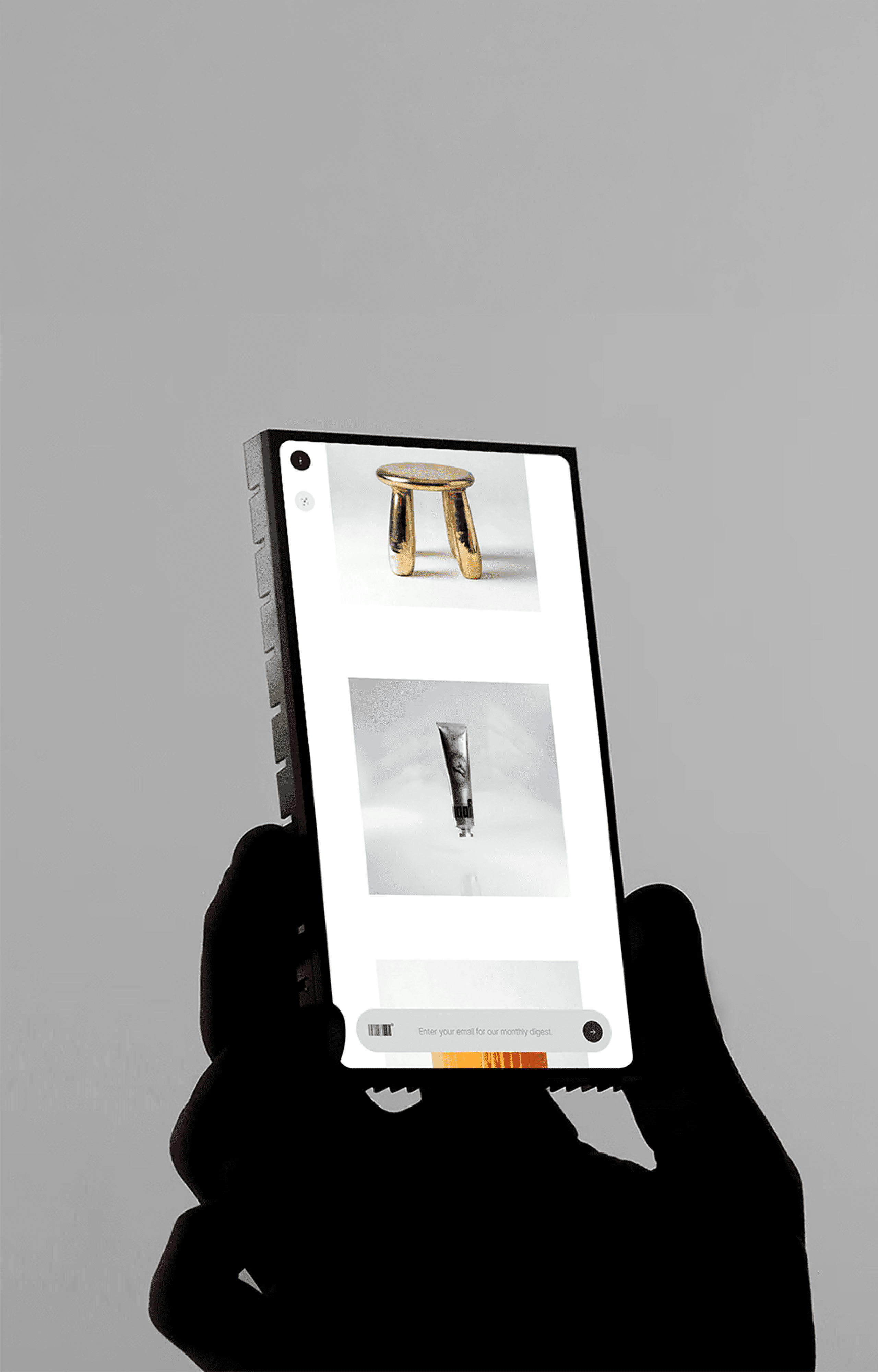
The second is a scroll view. A single product fills the screen and changes as the user scrolls, one brand at a time. This is the slower, more editorial view for users who want to sit with each product rather than browse.
The third is the About section, where brands and users can submit products directly. The backend tags each submission across vertical, category, price band, and availability. Over time, this creates a structured dataset without the user ever seeing the structure.
The interface is minimal. The infrastructure is not.
The Tech
IBD was built in two phases.
V1 was designed for speed: get a proof of concept live, generate real usage, and learn from actual user behaviour before committing to custom infrastructure.
The V1 front end runs on Framer for design fidelity and deployment speed. The AI agents are built on a combination of Claude for reasoning and content classification, Gemini for visual processing and motion generation, and custom logic for the handoff between discovery, processing, and publishing.
The V2 is being built now, in parallel. Every decision in V2 is being informed by real data from V1: Microsoft Clarity session recordings, user feedback, click-through patterns, and submission flows. Nothing in V2 is being built on assumption. The custom build inherits the lessons of the live product, not the opposite.
The architecture is deliberately lightweight. Every layer is replaceable. Every layer is API-driven. This is what allows the platform to fork cleanly into new geographies without rebuilding the stack each time.
The Fork
Geographic forkability was a requirement from day one, not a retrofit.
The logic is clean. The barcode mark accommodates any three-letter market code. The visual language holds across geographies with minor tonal adjustments. The tech stack is copy-paste deployable. A new country directory can be stood up in weeks, not quarters, once the local discovery agents are tuned to the market.
The team is actively exploring new geographies. The approach is data-led: each expansion is tested before it is committed, and the learnings from each new market feed back into the parent system. The long-term ambition is a unified platform across markets, but that unification will happen when the data supports it, not before.
The Long Game
The current product is the foundation. The roadmap is where IBD becomes a platform.
The next layer is personalisation. Users will log in, save products, follow verticals, and build taste profiles. The platform learns what a user responds to and begins surfacing brands they would never have found on their own. A parent in the first trimester gets kidswear months before they search for it. A new apartment owner gets homeware the week they move in.
The layer after that is commerce, and specifically new ways of thinking about commerce. Agentic commerce sits at the centre of this: with a logged-in user, a saved address, and real-time inventory access, the platform can collapse the discovery-to-purchase loop into a single tap. The system handles pricing, shipping, and stock agentically across retail partners, and completes the transaction without sending the user through a traditional cart flow.
Beyond that sit other novel approaches to purchasing. Limited drops. Curated scarcity. Event-driven discovery. Models the team is actively exploring, designed for the attention patterns of a market that has moved past the infinite-scroll-and-filter paradigm.
The Economics
Most directories monetise through featured placement. Pay to be seen, pay to be ranked.
We steered the client away from that model entirely.
The reasoning is structural. Paid placement corrodes trust in a discovery platform. The moment users suspect the surface is influenced by the wallet rather than the algorithm, the brand loses its most valuable asset: credibility as a taste-maker. The economics of IBD had to come from somewhere else.
The working thesis is a platform economy built on three layers: a discovery layer that stays free and editorial, a commerce layer that captures value at the transaction, and a data layer that eventually becomes its own product for brands looking to understand taste at scale. The platform pays for itself without compromising what users come to it for.
This is a Zero to One engagement in progress. We will keep building.
A Boutique Brand Advisory · frontdesk@lazyeight.design